


- 21 October, 2026
- Announcements
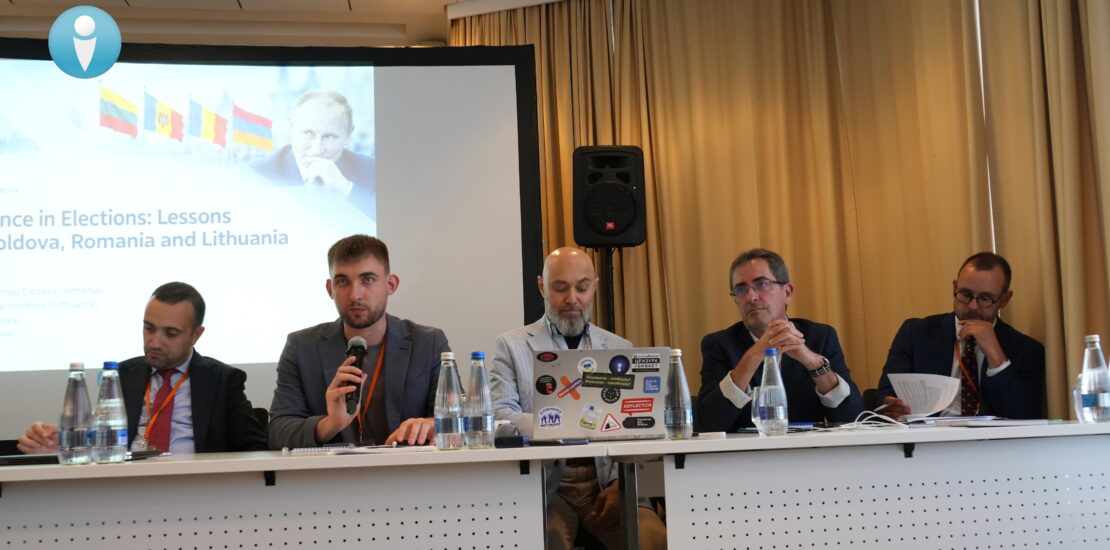
On October 13, a side event organized by the Union of Informed Citizens was held on the sidelines of the OSCE Office for Democratic Institutions and Human Rights (ODIHR) Human Dimension Conference in Warsaw. Titled “Russian Interference in Elections: Lessons from Armenia, Moldova, Romania and Lithuania,” the event examined the methods used by Russia to interfere in electoral processes across different countries.
The speakers included Daniel Ioannisyan, Programs Coordinator at the Union of Informed Citizens (Armenia), Tomas Kazulėnas, a representative of Civic Resilience Initiative (Lithuania), Andrei Rusu, a representative of WatchDog.md (Moldova), Sorin Ioniță, a representative of Expert Forum (Romania), and election expert Roman Udot.
The speakers outlined the methods Russia uses to interfere in electoral processes in different countries, addressing disinformation campaigns, mechanisms of political and financial influence, the manipulation of public opinion through social media, and efforts to undermine trust in democratic institutions.
Daniel Ioannisyan discussed the various forms of Russian interference during Armenia’s 2026 parliamentary elections, including a number of information operations.
Drawing on Moldova’s experience, Andrei Rusu presented mechanisms for influencing electoral processes through cryptocurrencies and Telegram channels, as well as disinformation campaigns targeting Maia Sandu. He also drew parallels with disinformation against Armenian Prime Minister Nikol Pashinyan.
Tomas Kazulėnas addressed Kremlin-aligned information interference in Lithuania, societal polarization, and attempts to undermine public trust in democratic institutions.
Presenting Romania’s experience, Sorin Ioniță discussed the promotion of pro-Russian candidates through social media, political advertising, and influencers. He stressed that states and existing regulatory systems often lack sufficient capacity to counter political influence operations conducted through social media platforms, underscoring the importance of more effective regulation.
Election expert Roman Udot presented work carried out jointly with the Fact Investigation Platform (FIP.am) to document Russian interference in Armenia’s electoral processes through evidence-based investigations.
The speakers’ presentations were followed by a question-and-answer session, during which audience directed questions to the experts. The discussion also addressed the question of restricting the activities of undemocratic political forces as a means of protecting democracy.
At the end of the discussion, participants emphasized that Russian interference methods follow common patterns across different countries. Effectively countering such interference requires identifying the mechanisms involved, facilitating the exchange of experience between countries, and strengthening the resilience of democratic institutions.
As emphasized during the event, properly diagnosing problems is an important prerequisite for addressing them.


